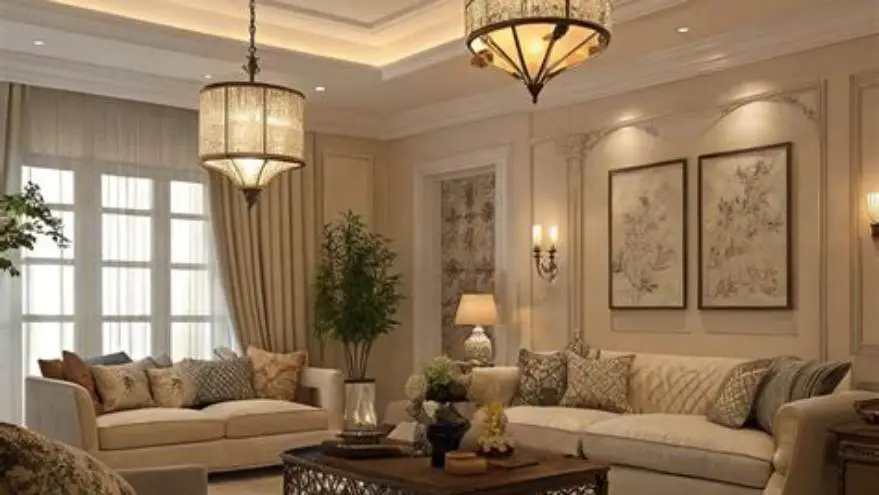
Quiet luxury home decor: the 4 elements that create subtle elegance

Quiet luxury home decor ideas make a room feel polished without logos, shine, or show. Warm neutrals, natural materials, layered texture, and restraint carry the look, while personal objects and soft light keep it livable.
The numbers
- Trend status
- Steady - warm neutrals hold the lead
- Best season
- Any season; layers suit fall, winter
- Budget level
- Low to medium
- Effort
- Moderate, mostly layering
- Renter-friendly
- Yes
- Core palette
- Warm neutrals, one dark anchor
- Core materials
- Linen, wool, textured blends, aged metal
In this reading8 sections
What quiet luxury actually means in home decor
Quiet luxury signals quality through material and fit, not through labels or shine. You notice it by touch first: washed linen, a wool rug, hardware with a soft aged finish. Calm comes from pieces that work together, not from a single object that shouts. Nothing in the room needs a logo to prove its worth.
Flashy luxury puts status in the foreground. Glossy marble, mirrored furniture, oversized logos and bright metal demand attention. Lower the visual volume and you get the quiet version, where texture, pattern and personal objects still belong. The room still feels full, just quieter.
It is not strict minimalism. Minimalism cuts the number of objects. This quiet look cuts visual noise while keeping tactile richness: drapes, wood frames, stone tables, woven baskets. Plenty can fill a room that still reads as quiet when the palette stays low-contrast and the finishes stay matte.
Stand in the doorway and scan the room once, slowly and closely. A flat-looking room needs texture. Reduce the shine on any object that pulls your eye. Personal objects can stay when they matter to you, even when they break a perfect palette. For the detail, see our notes on thanksgiving table decor ideas.
Use four elements to build the look
Check a room against four elements, in order. One pillow rarely changes the whole room. Palette, large surfaces and lighting all have to support it. Work through the four below before buying anything. Each element is a decision, not a purchase. Pass all four and the room reads as quiet luxury; pass three and it reads as nearly there.
Element one is a warm, low-contrast palette. Keep walls, large furniture and rugs near each other in value, then add one darker anchor. Element two is natural or natural-looking material on the large surfaces: linen, wool, wood, stone or paper. Element three is layered texture, and the texture section below gives it the full treatment. Element four is restraint: fewer accessories, quieter finishes, and only the glossy pieces you genuinely want to keep.
Run the audit below before buying anything. Photograph the room, touch the large surfaces, sit in the main seat and scan the shelves. In ten minutes the audit shows which element is missing. Most rooms fail on one element only, so fix that one first and re-test the room. If that sounds like your situation, read up on decorating a christmas mantel next.
- Palette: photograph the room and count the colours that dominate. Three warm, muted tones should lead.
- Materials: touch the three largest surfaces. Note each one as natural fiber, wood, stone, leather, or synthetic blend.
- Texture: sit in the main seat. List at least three nearby surfaces with different textures.
- Restraint: scan the shelves and tables and take away one duplicated object, branded package, or high-shine finish.
- Comfort: check the seat, walkway, and controls, and keep useful items within reach.

ANSSO Wool Rugs 8x10 for Living Room,80% Merino Wool and 20% Cotton Soft
Gives you an 8 by 10 ft wool-blend ground plane for a starter living room, shown by the rug's Length 120.0 inches and Width 96.0 inches.
Pick materials and colors for your room
Warm neutrals can use bone, greige, camel, oatmeal, muted olive, or chocolate. Keep contrast low on large pieces, then add depth with walnut, espresso, dark bronze, or a patterned textile. One darker anchor stops a pale room from looking washed out.
Paint companies' own 2025 picks point the same way. Many major paint brands highlighted warm, earthy neutrals in their 2025 palettes. The warm-neutral reading here follows that direction, and readers should test colours in their own light.
Materials carry more weight than colour here. Linen suits drapes and relaxed upholstery. Wool suits rugs and blankets. Oak, walnut, travertine-look ceramic, honed stone, and aged metal add depth without high shine. Bouclé is very visible: use one chair, pillow, or slipcover if longevity matters, then balance it with linen, wool, cotton, or a durable natural blend. It helps to understand home decor styles returning before going further.
Test paint once, in one place. Paint two coats on a movable board, label the colour, and view it beside your trim and flooring in morning, afternoon, and evening light. Check it under your installed bulbs: warm LEDs around 2700K to 3000K can make warm whites look creamier. Cooler bulbs can turn them gray.
Cool gray-on-gray and sharp black-and-white schemes still work in the right architecture. Textiles, wood, and lower-contrast artwork can update cool rooms without replacing sound finishes.
Mix textures around each seat
Texture separates a warm neutral room from a flat beige room. Start with three tactile surfaces within arm's reach of each main seat. Make them differ in scale or feel, such as smooth linen, nubby cotton, and coarse wool. That contrast is the whole trick. Three different surfaces read as layered; three similar ones read as matched.
Build from the floor upward. Place a wool or wool-blend rug so the front legs of the main seating sit on it. Measure the seating footprint first, then choose the smallest rug that gives each front leg a stable landing.
Hang drapes high enough to suit the room, then measure from the track or rod to the floor. Common practice places the rod about 4 to 6 inches above the frame, but trim, ceilings, and hardware can change the best position.
Add one smooth pillow, one nubby pillow, and a throw per seat. In a small room, keep only one strongly nubby item. Avoid matching texture to colour: a camel linen pillow beside an olive wool throw feels richer than three camel bouclé pieces.
Quiet luxury home decor ideas that suit real homes
Start with changes you can reverse. Our editorial preference is to spend more on pieces you touch often, such as rugs, seating fabric, and hardware. Use inexpensive finishes for accents you may replace as your taste changes. Nothing here needs a contractor. Built this way, a room can shift with the seasons without a full redo.
These suggestions include renter routes and measurement conditions. Each one names the size or the check that decides whether it works. Skip any idea that fights your room: the look comes from the four elements, not from owning every piece on the list. Begin with the piece you touch most, and let the rest follow.
Work in one room first, and finish it before starting the next. One finished living room teaches the palette faster than a whole-house plan. Change one thing at a time and watch what it does.
Renters get the same look without paint. Hardware swaps, rugs, lighting, and removable textiles carry the four elements on their own. Store the original hardware and keep the landlord's fixtures intact. On move-out day the room should look intentional, not stripped.
- Warm textile shift: bone, oatmeal, or soft greige textiles carry the palette when repainting is impractical.
- Wool rug: measure the seating footprint first, then choose a size that supports the front legs.
- Linen-look drapes: measure rod to floor before ordering; use removable hooks where wall and fabric weight allow.
- Textured accent chair: use one bouclé, chenille, or woven seat where daylight shows the texture.
- Aged-metal hardware: measure screw spacing before ordering pulls; store the originals for move-out.
- Cordless picture light: pick a model with a replaceable battery and place it for even coverage.
- Stone-look side table: travertine-look ceramic or composite gives a matte effect with less weight.
- Shelf edit: clear duplicate containers and glossy packaging; keep books, photographs, and meaningful souvenirs.
- Warm wood frame: choose one substantial frame for the main artwork and set its height by the wall.
- Rug first: an 8 by 10 ft wool or wool-blend rug in a warm neutral, with the front legs of the sofa on it.
- Drapes second: linen-look panels, rod 4 to 6 in above the frame, hemmed to skim the floor.
- Throw and pillows third: one cotton or wool-blend throw per seat, roughly 50 to 60 in long, plus 18 in covers with larger inserts.
- Lamp fourth: one floor lamp with a warm-white bulb near 2700K to 3000K beside the main seat.
- Hardware fifth: aged-metal pulls in a quiet finish; measure the screw spacing first and store the originals.
- Dark anchor and art last: one walnut, espresso, or dark bronze object, and one framed piece centred about 57 to 60 in from the floor.
Choose furniture and accessories with care
Shape sets the mood before fabric does. Rounded arms, barrel chairs, oval tables and softly edged cases read as relaxed. Chrome legs and high-gloss lacquer still work, but they push the room toward a sharper, more modern mood. Choose the shape for the mood you want, not for the trend.
Fewer, larger accessories suit a room that can carry their scale. Measure the console before choosing a vase, and leave landing space beside the seating. Keep heavy objects stable where children or pets might reach them. One large vase beats five small ones on a long console.
Art height has no universal rule. Most guides put the artwork centre about 57 to 60 inches from the floor. Measure from the floor to the centre, then adjust for furniture, sightlines, and household members' heights. Hang one piece first and live with it before hanging the rest.
Evening light softens with warm bulbs near 2700K to 3000K, yet the fixture, shade, wall colour, and dimmer all shape the result. Try one lamp in the room before replacing every bulb. Bulbs that flatter the wall in one room can look flat in the next.
| Dimension | Quiet luxury | Flashy luxury | Minimalism |
|---|---|---|---|
| Palette | Warm bone to camel, low contrast | High contrast, bright metal, strong black and white | White and gray, often high lightness |
| Materials | Linen, wool, textured blends, wood, matte stone | Glossy lacquer, polished stone, chrome, visible logos | Any material, with fewer visual elements |
| Object count | Moderate, edited, and tactile | Many statement objects | Very low |
| How it reads | Calm, layered, and personal | Loud and status-focused | Clean, sometimes flat |
| Common mistake | Using beige without texture | Using too many status markers | Removing warmth and comfort |
- Works in rentals with textile, lighting, and hardware swaps
- Natural materials can age gracefully when cared for properly
- A neutral base allows seasonal color changes without replacing large pieces
- Beige without texture can look flat
- Some bouclé and wool surfaces collect pet hair
- Natural fibers need care, and some stain more easily than performance fabrics

Tassuowell Picture Light Battery Operated with Remote
Keeps your cordless art lighting running longest between charges with the built-in 10,000mAh rechargeable battery.
Quiet luxury has broad mainstream visibility. It is worth doing when you favor comfort, durable materials, and personal objects over fast-changing accents.
The essentials
- Start with the living room; one finished room teaches the palette faster than a whole-house plan
- Favor durable materials so the look lasts past the current retail cycle
- Paint is a high-impact change: test warm whites and soft neutrals in your actual room
- Choose the rug before the paint, since it sets both palette and scale.
- Renters can use hardware, rugs, lighting, and removable textiles instead of repainting
Still wondering?
Can you use quiet luxury ideas in a small apartment?
Yes, and small rooms suit the look. Hold one palette across the room and limit strong texture to one or two pieces. Pick a rug that fits the front legs of the seating, and measure furniture first.
Is bouclé a good long-term choice?
As one modest accent, yes. Read the care label and check the rub count before buying. Where seating takes daily use, linen, wool, cotton, leather, or a durable blend usually wears better.
What is the cheapest first step?
Start by editing what is already there. Clear duplicate objects and packaging, then group the pieces worth keeping. A washable throw or textured pillow finishes the job.
What wall colors work for quiet luxury?
Try bone, warm off-white, oatmeal, or soft greige, and test on a movable board first. See the paint section above for the full test. For named palette examples, check the official colour trend pages from Benjamin Moore and Sherwin-Williams.
Does quiet luxury require expensive furniture?
No. Fit, comfort, finish, and material count more than any label. Secondhand solid wood, a linen-blend cover, or a wool-blend rug can carry the look. For water-based cleaning, choose upholstery marked WS or W and follow the maker's label.
How can people with pets or limited mobility adapt the room?
Pick tight-weave fabric, leather, washable covers, or performance upholstery where pets and spills are likely. Fix rugs down with nonslip pads. Leave paths clear, skip low tables, and choose firm seating with arms where standing support helps.