How to Style a Coffee Table So It Looks Done, Not Cluttered

Style a coffee table in three groups: one flat anchor, one tall piece and one living thing. Keep the tallest piece under 14 in (36 cm), keep a clear patch for everyday use, and size the table to two-thirds of the sofa.
Part of our guide on how to style bookshelves
The numbers
- Trend status
- Steady - evergreen how-to, always in demand
- Best season
- Any season, refresh in spring
- Budget level
- Low
- Effort
- An hour to style
- Renter-friendly
- Yes, nothing is fixed
- Pairs with
- A rug that fits the sofa
In this reading8 sections
Check the table before you style it
Measure the sofa before you buy a single object. Aim for a table about two-thirds the length of the sofa. An 84 in (213 cm) sofa pairs with a table of 48 to 56 in (122 to 142 cm). Anything longer crowds the room. Anything much shorter looks lost. Size first. Style second. These ranges come from the sizing rules furniture guides repeat most often.
Height decides comfort, not looks. Set the top level with the sofa seat or 1 to 2 in (2.5 to 5 cm) lower. Most tables land at 16 to 18 in (41 to 46 cm). A taller top forces your arm up for every cup. A much lower top makes the reach awkward the other way. That rule never changes.
Leave 14 to 18 in (36 to 46 cm) between the sofa edge and the table. That gap lets you stand without catching your knees. Reach stays easy, with no leaning for a drink. Give walkways about 30 in (76 cm) on any side people use. A table that blocks the path gets bumped daily.
Shape follows the room, not the catalogue. A rectangular table suits a standard sofa and a long room. Round tables soften a small square room and have no corners to catch a shin. Oval tables split the difference between the two. Pick the shape that fits the traffic first. Traffic decides. People in this spot often ask about warm living room for winter as well.
| Sofa length | Table length that fits |
|---|---|
| 72 in (183 cm) | 40 to 48 in (102 to 122 cm) |
| 84 in (213 cm) | 48 to 56 in (122 to 142 cm) |
| 96 in (244 cm) | 56 to 64 in (142 to 163 cm) |
| Sectional | Two-thirds of the main section |
How to style a coffee table in three groups
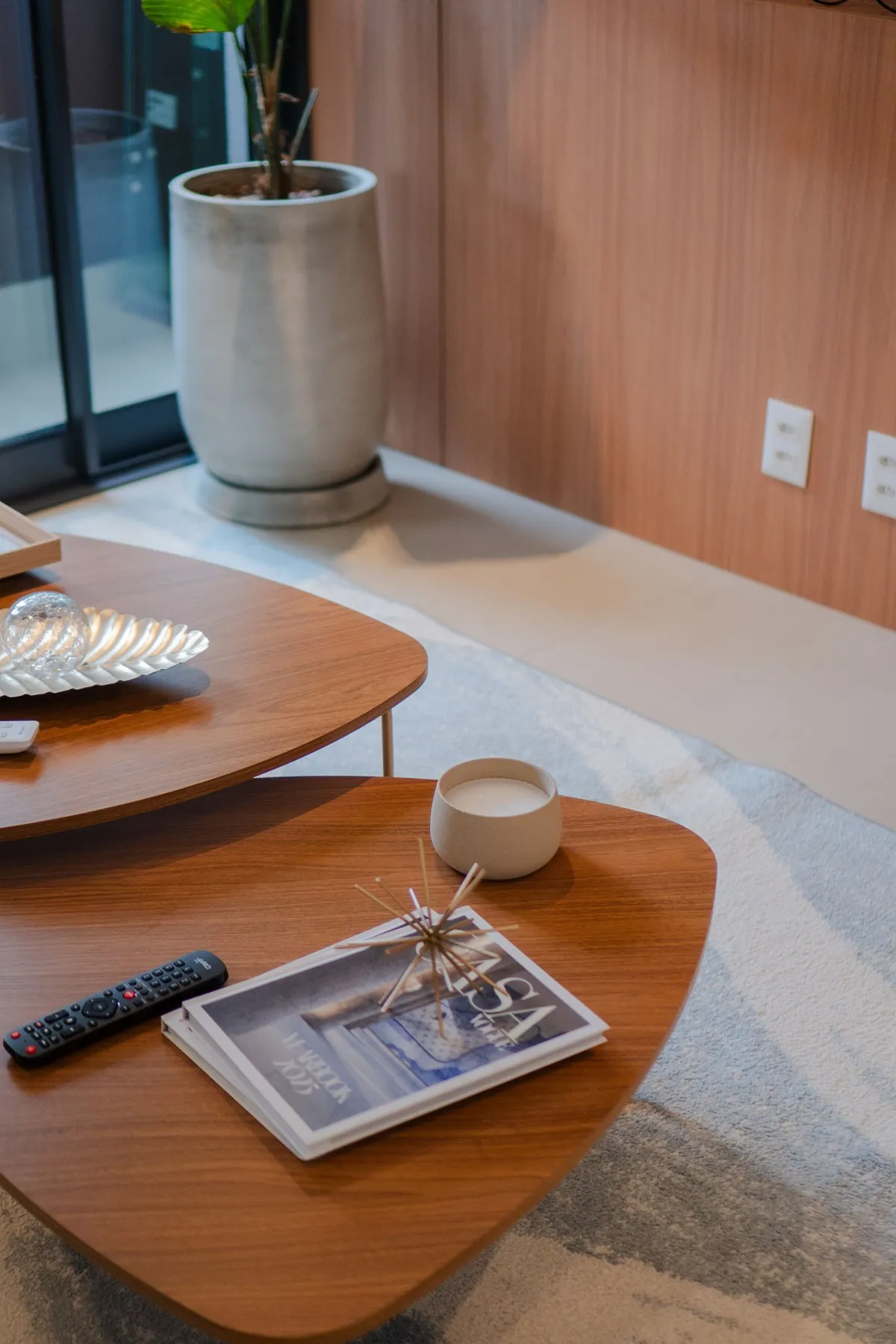
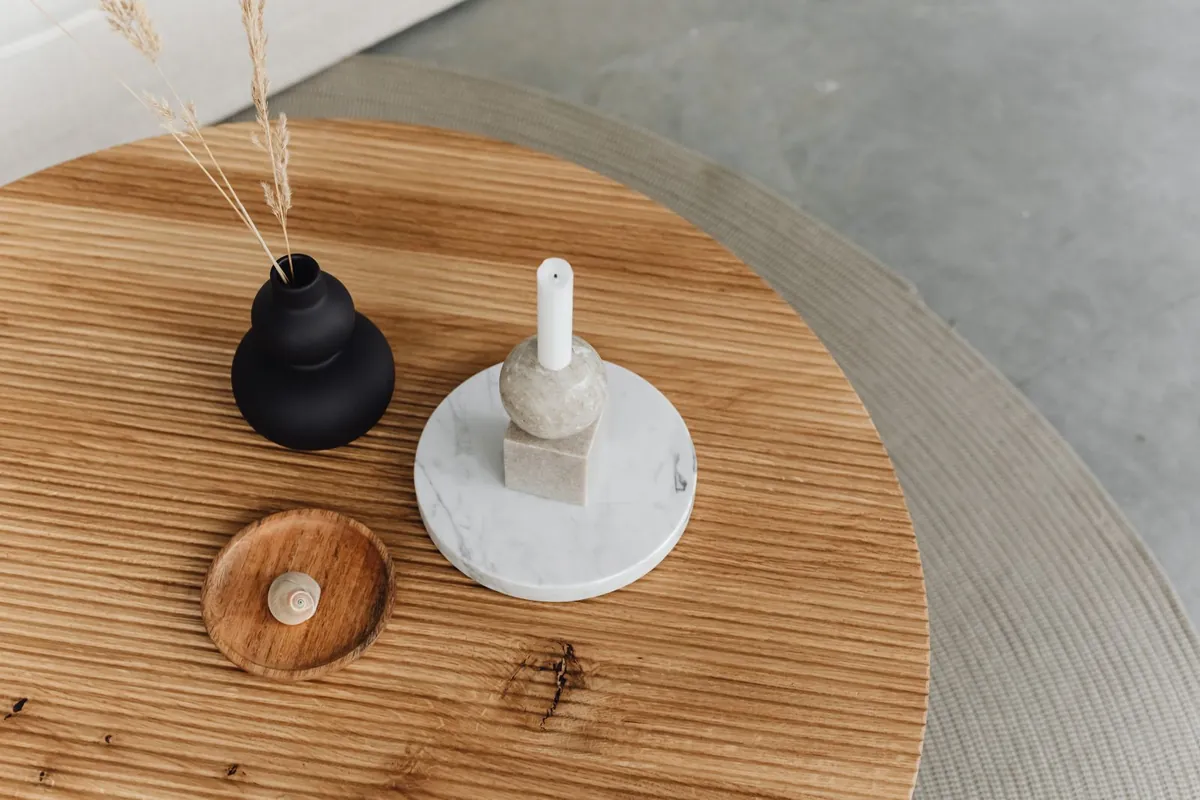
Three groups cover every good coffee table. One group holds the table down, one gives it height, and one keeps it alive. Five groups are the most a very large table can carry. Two groups can work on a small table. Count groups, not objects, and the table stops looking cluttered. Three groups are enough because the eye reads a table in one glance, and five loose objects need sorting before they make sense.
Start with the anchor. The anchor is a low tray, a stack of two or three large books, or a wide shallow bowl. Set it slightly off centre on a rectangular table. On a round table it sits to one side, never dead centre.
Tall comes next. One vase with stems, one candlestick, or one sculptural object rises above the anchor. Hold it between 8 and 14 in (20 to 36 cm) high. Anything taller blocks the view across the room. It turns the table into a fence when it hides the person opposite. If that sounds like your situation, read up on christmas mantel decor ideas next.
Living softens the hard edges. Small plants, bowls of fruit, and cut branches add shapes no bought object can copy. Fresh stems beat fake ones here. Dead plants read worse than no plant at all. Water the stems and the table stays alive for a week.
- Clear everything off the table and wipe the top.
- Set the anchor: a tray, a book stack, or a shallow bowl.
- Add the tall piece beside the anchor.
- Add something living at a different height.
- Add one personal object, nothing more.
- Step back, sit down, and remove one thing.

Small Ceramic Bud Vase Flower Vase Decorative Floral Holder (Green)
Provides a narrow-neck bud vase that holds a few stems upright with a published top width of 1.57 inches and overall Height 5.0 inches.
Choose pieces that earn their spot
Books do the heavy lifting on a coffee table. Stack two or three large ones flat, biggest at the bottom. Pick books you would actually open. Stacks nobody reads look staged within a week. Leave the top book face up, open to a good page. Spine colours should stay inside the room's palette.
Trays corral the small stuff into one group. One tray holds a candle, a remote, and a small vase. It lifts off in a single move when you need the table. Choose a rim under 2 in (5 cm) high. Deep trays hide what sits inside them and read like boxes. It works. It helps to understand trends in vintage home decor before going further.
Vases add height without weight. Bud vases with three stems do more than large arrangements that block conversation. Ceramic, glass, and stone each change the mood of the table. Match the vase to the room, not to the season alone.
Candles bring the table alive at night. One candle in a glass holder or a short pillar is enough. Keep the flame low and away from pages and dry stems. Battery candles suit homes with small children or pets.
Match the method to your table shape
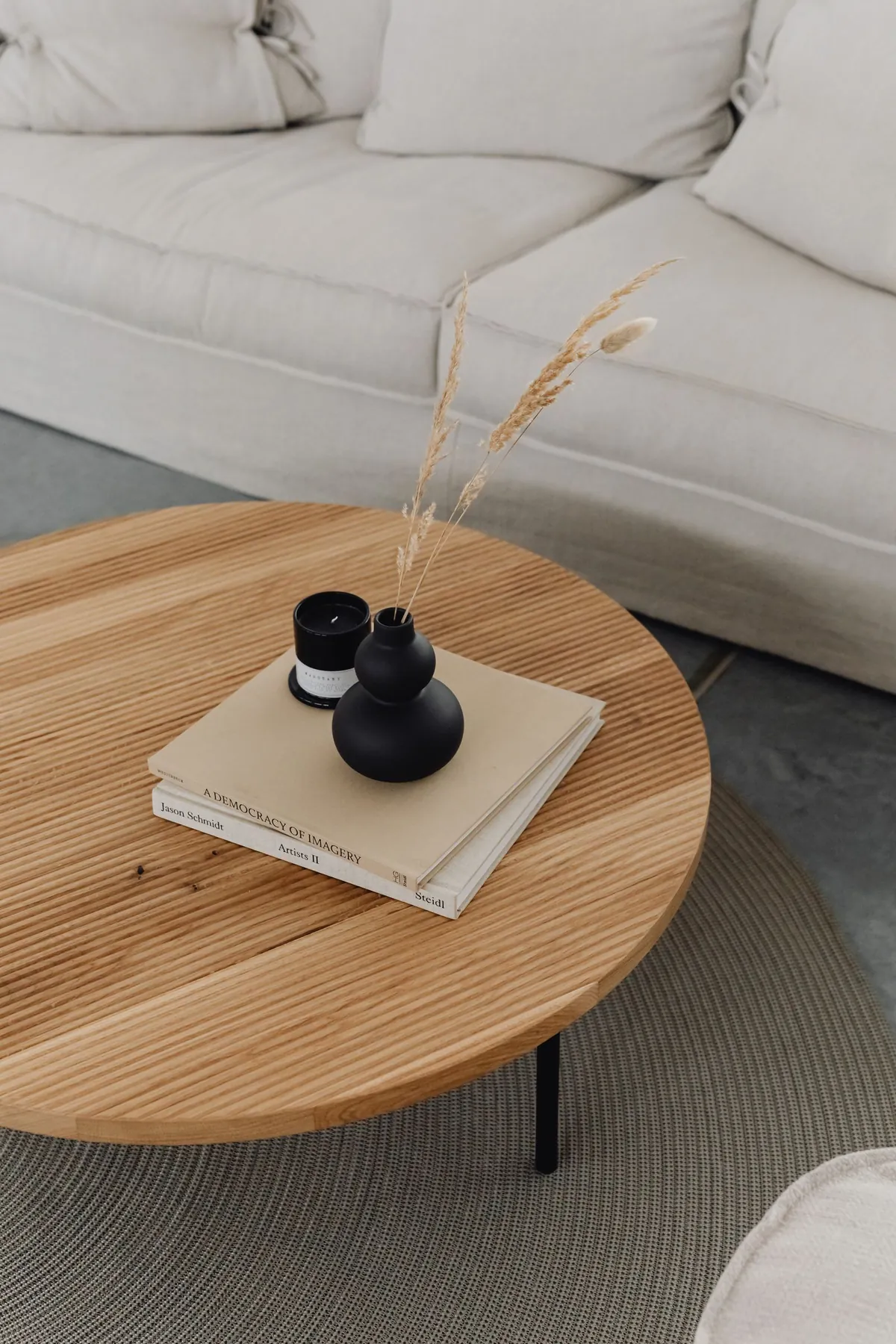
Rectangular tables take the classic split. Put the book stack at one end, the tray in the middle, and the plant at the other end. Leave one end open for mugs and laptops. The long axis does the work, so keep the line of groups along it.
Round tables need one clear side. Style a tight cluster on one half and leave the other half bare. Round trays mirror the table shape and keep the cluster tidy. Clusters near the edge leave room for a drink on the far side. Avoid spreading small objects around the rim. They read as clutter from every seat.
Square tables suit a centred anchor with one tall piece beside it. Four equal corners tempt you to fill each one. Resist that urge. Strong groups beat weak ones every time. Less wins.
Oval and nesting tables follow the same rules with softer lines. Treat an oval like a rectangle with curved ends. Style the top table of a nesting set and leave the lower one free. Guests pull it out when they arrive. It slides back under when the room clears.
- Rectangle: three groups along the long axis, one end clear.
- Round: one cluster on one half, the other half bare.
- Square: one centred anchor, one tall piece.
- Oval: same as rectangle, softer lines.
Swap the season without starting over
Winter asks for warmth on the table. Swap the summer stems for evergreen sprigs or dried branches. Trade a light ceramic for a darker one. Light one candle and let the rest stay. Greenery from the garden costs nothing and smells like winter. The table should feel like December, not like a shop window.
Spring lifts the palette. Fresh tulips or daffodils replace the heavy greens. Pale trays or linen runners lighten the whole table. Hold the same three groups and change only the contents. Fresh flowers from the market cost little, last a week on the table, and change the whole room for less than a new cushion would.
Summer wants less on the table, not more. Citrus in a bowl or a single stem in a glass vase is enough. Clear the books you are not reading. Paperbacks stack neatly beside the bowl when the table clears for lunch. The table earns its keep as a place for cold drinks and paperbacks.
Fall brings texture back to the table. Small wooden bowls, warm-toned books, and one amber candle set the mood. Dried leaves work for a week, then they shed. Swap them before they do. Swap the candle colour with the leaves, amber for October and cream for November.
Five mistakes that make a styled table look cluttered

Too many objects is the first mistake. Ten small things read as clutter. Three groups read as a choice. Fewer objects always read better than one too many. When in doubt, take one thing off and live with the table for a day.
Over-tall pieces block the room. Vases that hide the person across from you have failed, however pretty they are. Hold the top piece below eye level from the sofa. Check it from a seated position before you keep it. Sit down first.
Matching sets flatten a table. Tray, vase, and candle from one set look bought, not chosen. Mix materials: wood against ceramic, glass against linen. Repeat one colour through the pieces to tie the mix together.
Empty space is not wasted space. Tables with no bare top have nowhere for a mug to land. Leave a third clear, always. That clear patch makes the styled part look deliberate.
Scale beats taste. Tiny vases on huge tables look lost. Giant bowls on small tables leave no room to use them. Size each piece to the table, not to the shop shelf. Test each piece at home, because a vase that looks right in the shop can still drown a small table. Small apartments suit nesting tables, and very low sofas pair with lower tables, so measure your own seat before you buy.
The essentials
- Size the table first: two-thirds of the sofa, seat height, 14 to 18 in away.
- Think in threes: a flat base, a tall piece, something alive.
- Tallest piece stays low, and one side stays bare for daily use.
- Swap stems and one accent each season; keep the groups the same.
Still wondering?
How many items should be on a coffee table?
Three groups are enough for most tables. Very large tables can carry five groups. Count groups, not objects. Each group can hold two or three small things, and a third of the top stays clear for everyday use.
How tall should coffee table decor be?
Keep the tallest piece between 8 and 14 in (20 to 36 cm). That height reads clearly from a seat without blocking the view across the room. Book stacks should stay under about 6 in (15 cm) so they do not wobble or crowd the sightline.
What size coffee table do I need for my sofa?
Measure the sofa first, then match the table to it. Length, height, and the gap from the sofa all decide comfort. Those numbers live in the sizing table in the first section.
Can I style a coffee table on a budget?
Yes. Shop the house first for books, bowls, and vases you already own. Thrift stores turn up trays and ceramics for very little. Buy new only a tray and a vase, and only if you own nothing that fits.