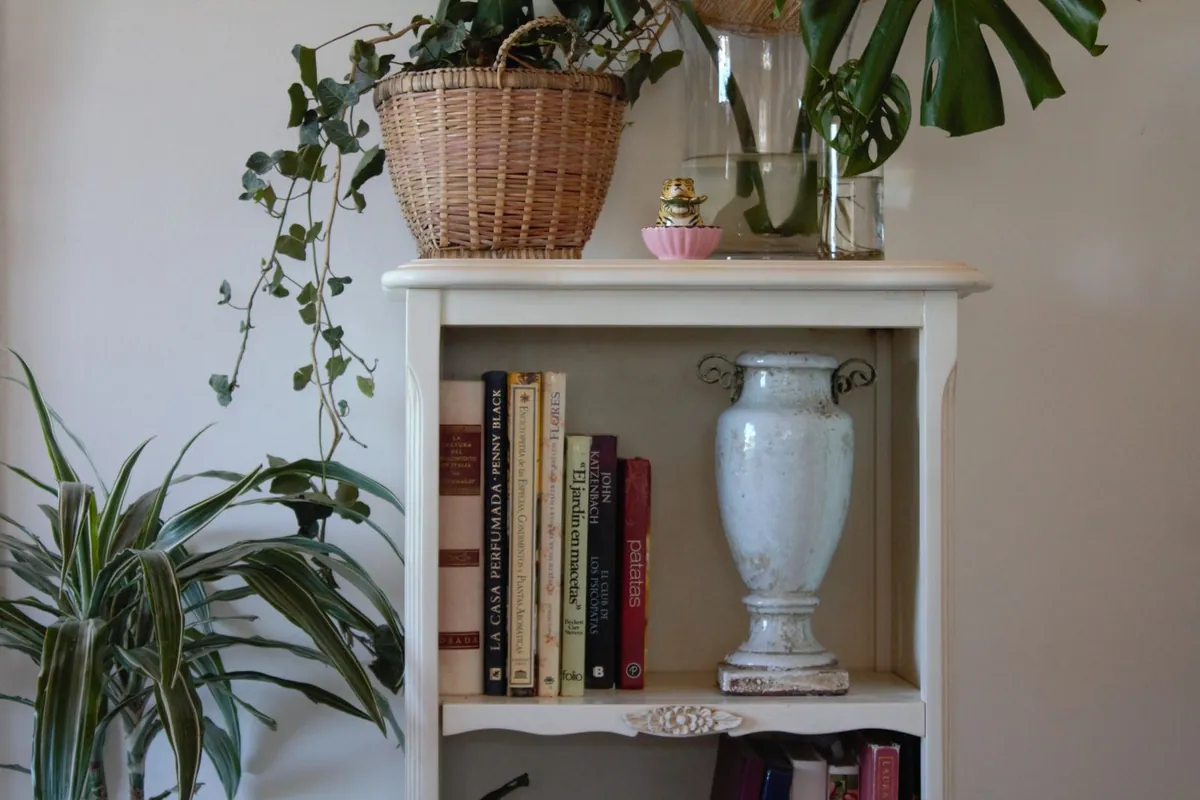
How to Style Bookshelves That Look Collected, Not Cluttered

Style bookshelves by favoring mostly books, with some objects and deliberate empty space. Give every shelf one tall anchor, group objects in threes, and vary the heights. Use it as a guide, not a hard rule.
The numbers
- Trend status
- Steady - shelf styling stays in demand
- Best season
- Any season, refresh in January
- Budget level
- Low
- Effort
- A weekend afternoon
- Renter-friendly
- Yes, no fixing needed
- Pairs with
- Warm light, calm colour
In this reading8 sections
Empty the shelves and measure first
Empty every shelf before you place a single thing. Bare shelves show you the space you actually have. Dust each shelf as you go, so the books land on a clean surface. This one emptying also forces the edit every styled shelf needs. Clear first. Style second. A single clear-out sets up every shelf that follows, and the unit looks better empty than it ever did full.
Measure the height between shelves and the depth of each one. Many shelves fall between about 10 and 12 in (25 to 30 cm) deep, but check yours. That depth decides what fits, and the clearance decides how tall an object can stand. Note the numbers on paper, or you will guess them wrong in the shop. Numbers first. Taste second. Adjustable shelves let you change the clearance, so set tall openings where the tall pieces go.
Sort everything into three piles as it comes off. Books go in one pile, objects in the second, and anything that does not belong goes in the third. Remotes, chargers, and mail leave the room now. What stays should earn its shelf by looks or by use. Nothing stays by accident. Keep only what earns it.
Start by counting the books. Note the shelf length, then stack a representative group of your hardcovers to see how many fit. Leave visual gaps for objects as you go. We go through christmas mantel styling tips step by step elsewhere on the site.
How to style bookshelves with the 70/30 split
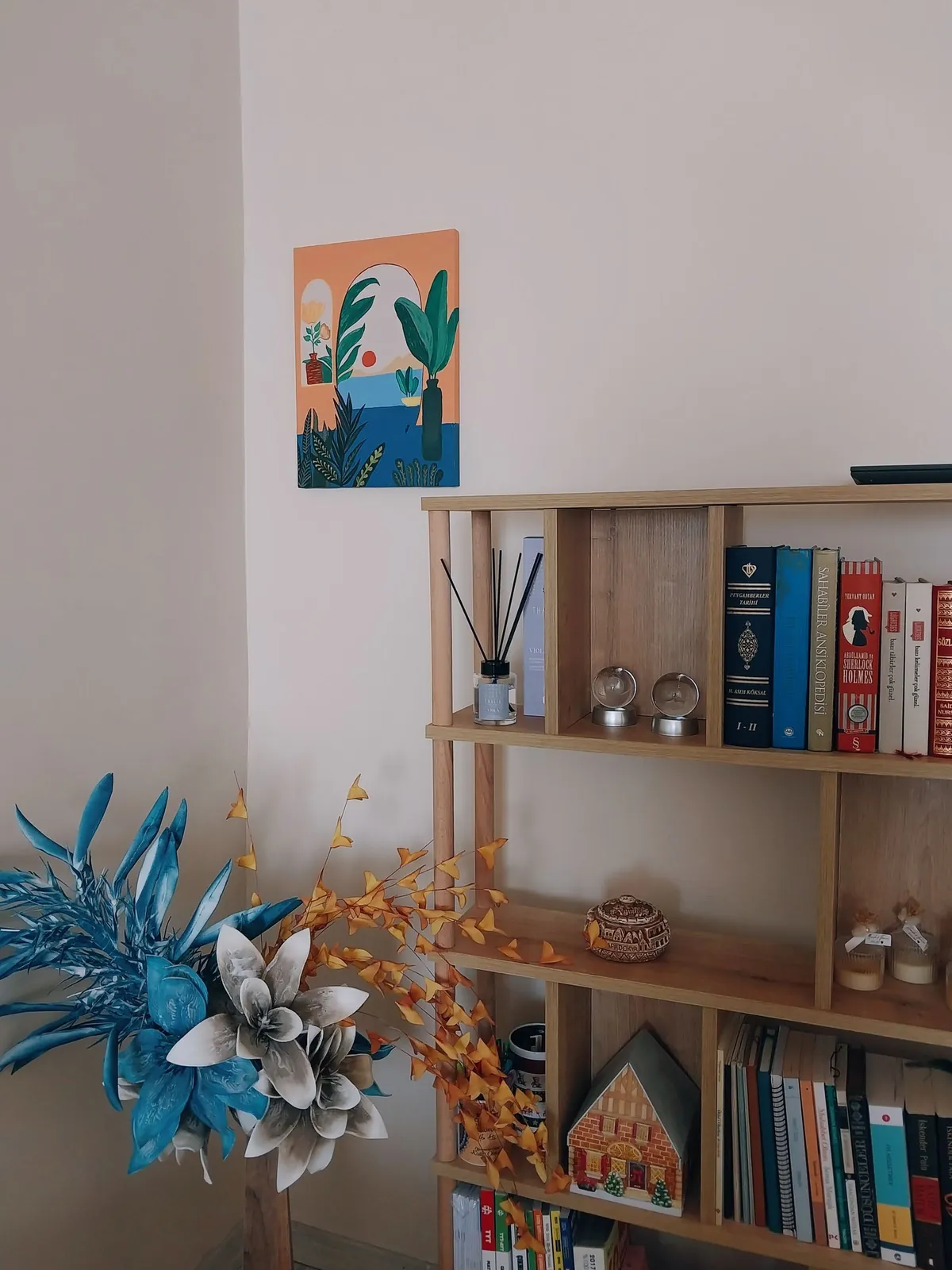
Balance three things on every shelf: books, objects, and empty space. Books are the bulk, about 70 percent of the shelf. Objects are the punctuation, the other 30 percent or so. Empty space is the third ingredient, and the one people forget. Treat the split as a starting point, not a law. Three ingredients, one calm shelf: books, objects, and air between them. That is the whole method.
Work shelf by shelf, top to bottom. Fill the books first, then place the objects, then check the empty space. One shelf can lean heavier on books while the next leans on objects. The split holds across the whole unit, not on every single shelf. Judge the split across the whole bookcase, not on each shelf: let one shelf run heavy on books and the next heavy on objects. Bookcases are forgiving: one shelf heavy on books still works when the next runs heavy on objects, because the eye reads the unit.
Stand books upright in groups of five to eight. Break the rows with horizontal stacks of two to four books. Those flat stacks make platforms for a vase or a small frame. Alternate upright and flat groups down the unit for rhythm. Rhythm, not rows. Rhythm matters. We go through how to style a coffee table step by step elsewhere on the site.
Leave a clear gap on every shelf. Empty space is what makes the rest look chosen. Shelves packed edge to edge read as storage, however pretty the books are. Step back after each shelf and look at the whole unit.
- Empty the unit and sort books, objects, and discards.
- Note the opening height and depth of each shelf.
- Place the books first, leaving room for objects and empty space.
- Set one tall anchor on every shelf.
- Add the objects, then leave a clear gap on each shelf.

Vanselia Ceramic Flower Vase Home Decor
Anchors a tall shelf opening with a single ceramic vase standing 12.3 inches high, giving a clear vertical focal point.
Set one tall anchor on every shelf
Peak is the word stylists use for the tallest piece on a shelf. Every shelf needs one, and only one. It sets the top point of a triangle, with medium and low pieces falling away from it. Without a peak, shelves look flat, however full they are. A peak on every shelf. Nothing more. No peak, no triangle, no structure: the shelf falls flat.
Size the peak to the opening, not to the shop shelf. Choose a tall piece that feels proportionate to the opening, often a bit shorter than the shelf height so it does not look cramped. Test by holding objects up to the opening before you buy. Keep at least 2 in (5 cm) of headroom above it. Pieces that touch the shelf above look jammed in. Check twice. The other half of this decision is living room winter cozy ideas.
Alternate the peak from side to side as you go down. Left on one shelf, right on the next, and the eye zigzags down the unit. Two peaks on the same side in a row make the unit lean. Vary the peak itself too: a vase, a tall frame, a sculptural branch. Eyes follow the zigzag. Vases left on one shelf and frames right on the next pull the eye down in a zigzag.
Top shelves take the lightest tall pieces. Tall vases and leaning frames suit the top third. Heavy objects belong low, where their weight looks right. Save the middle shelves for the pieces you love most. Middle shelves are where the eye rests, so they deserve the best of what you own.
Build triangles, not rows
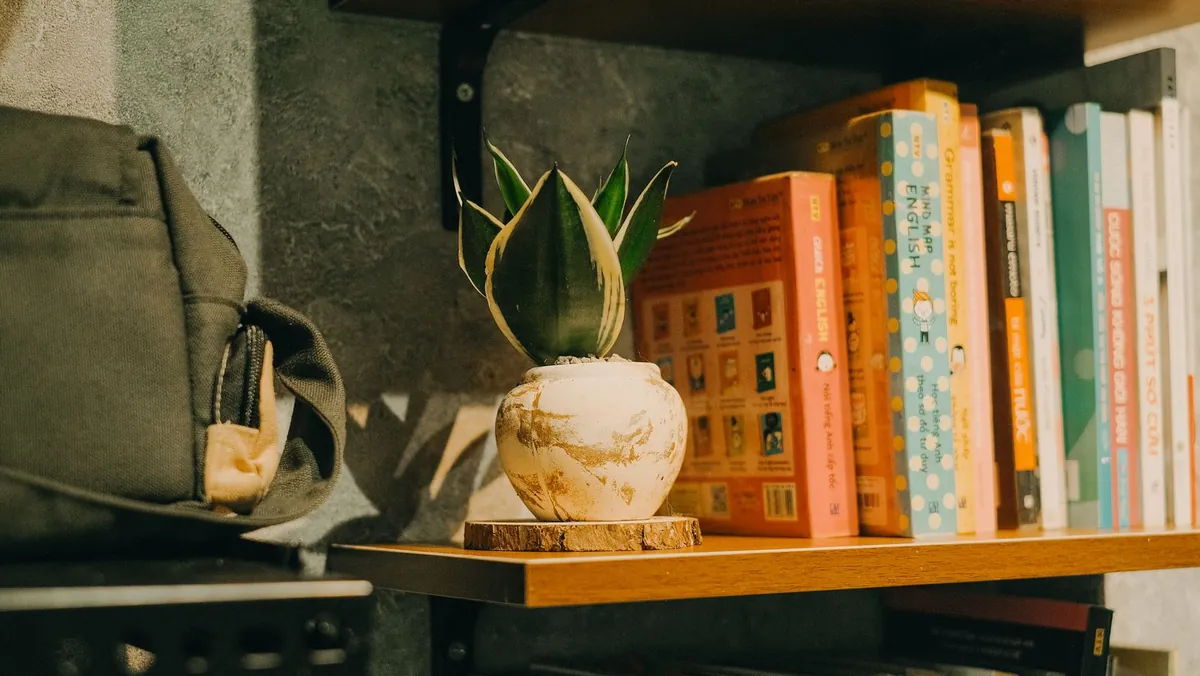
Triangles are the shape that makes shelves look designed. Arrange three pieces so their tops form a rough triangle: one tall, one medium, one low. The eye moves up and down instead of scanning a flat line. Rows of same-height objects read like soldiers on parade. Tall, medium, and low pieces read as a scene, while equal heights read as a storage rack. Triangles guide the eye up and down, so the shelf feels composed rather than stacked.
Group objects in odd numbers. Odd groups read as natural, while pairs look staged and fours look like a row. Vary height, shape, and texture inside each group. Tall vases, medium book stacks, and low bowls compose almost by themselves. Odd wins.
Layer at three depths: back, middle, and front. Lean a book or frame against the back wall first. Set a small object 5 to 6 in (13 to 15 cm) in front of it. Finish with a candle or low plant at the very edge. The three depths turn a flat shelf into a small scene. Back, middle, front: three depths, one scene.
Repeat one element down the unit to tie the shelves together. Brass frames on two shelves, a brass vase on a third, and the unit reads as one piece. Repeat a material, a colour, or a height, never all three at once. Too much repetition turns a family into a matching set. A repeated piece is a thread, three make a pattern, and five make a matching set. Thread, pattern, set.
Repeat a colour and a material down the unit
Colour holds a bookcase together more than any single object. Pick a story of two or three colours and keep to it. Spines do most of the work, so face the loudest covers inward when they clash. Neutrals plus one accent colour is the safest story to start with. Two colours. Three at most.
Materials repeat the same trick in texture. Wood, ceramic, and linen warm a shelf; glass and metal cool it. Two or three materials across the whole unit is plenty. Four materials on every shelf turn calm into clutter. Warm materials forgive a lot, and a single cold metal shelf can chill a whole bookcase, so mix with care. Two materials warm a shelf; four materials crowd it.
Light is the finish that costs least and shows most. Warm light makes wood glow and spines read clearly after dark. One small light per shelf, or one strip along the top, is enough. Cool white light flattens the colours, so choose warm white. Warm light flatters wood, softens spines, and makes a plain shelf feel finished after dark.
Edit again after a week of living with the shelves. Pieces that still bother you on day seven come off. Shelves that feel finished on day one often feel crowded by day seven. Take the weakest piece off each shelf and the unit breathes. Label the boxes if more than one person uses them. Done is better than perfect here. Edit hard.

BestLuz Battery Powered LED Strip Lights
Gives warm-white shelf illumination at 2700K with heavy-duty 3M adhesive for stick-on mounting.
Five mistakes that make shelves look like storage
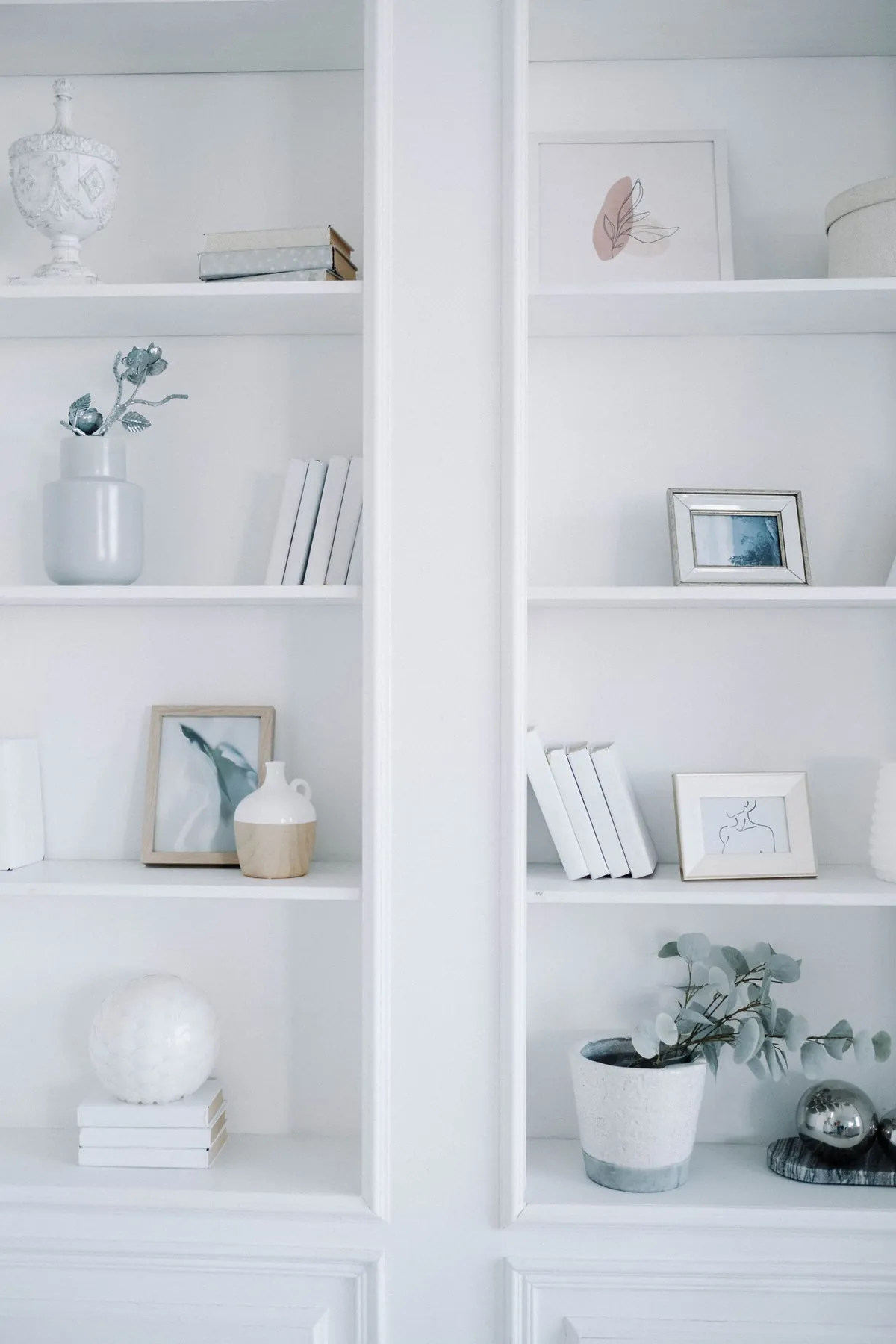
Tiny things in rows are the first mistake. Shelves of small souvenirs read as gift shops. Group small pieces into one tray or take them off. One large object beats five small ones on any shelf. Heroes beat souvenirs.
Full shelves are the second mistake. Every inch filled leaves the eye nowhere to rest. Cut a fifth of each shelf and the rest suddenly looks chosen. Negative space is a design choice, not a gap to fill. Cut more. Less is more.
Matching sets are the third mistake. Long runs of identical items look too uniform. Break them up with different pieces or spread them across shelves. Mix eras and materials and let one colour tie them. Sets broken up across two shelves look intentional. Break the set.
Clashing colours are the fourth mistake. Every bright spine fighting for attention tires the eye. Turn the loudest spines to the wall or group them by colour. Calm shelves let one bright object shine. A single bright object per shelf is plenty.
Zones are the fifth mistake people forget. Top shelves want light and tall; bottom shelves want heavy and closed. Baskets and boxes belong low, where they hide the everyday overflow. Open shelves stay calm when the clutter has a home below. Baskets hide the chargers, the spare batteries, and the board games, so the open shelves above them can stay calm and uncluttered. Heavy below, light above, calm throughout.
The essentials
- Books take most of the shelf, objects take less, and some stays empty.
- One tall anchor per shelf, about two-thirds of the opening.
- Triangles beat rows: one tall, one medium, one low in each group.
- Repeat one colour and one material down the whole unit.
Still wondering?
How many books should be on each shelf?
Estimate with your own books: fill a shelf, then pull a few back for objects and air. There is no universal count, since book thickness varies so much.
What is the rule of three for shelves?
Use one tall, one medium, and one low piece in each group. Odd groups read as natural, while even groups look staged.
How much empty space should shelves have?
Keep a clear gap on every shelf. That gap is what makes the books and objects look chosen. Shelves packed edge to edge read as storage.
Should books face spine out or pages out?
Spines out is the classic look and the easiest to use. Pages out calms a shelf where cover colours clash. Try spines out first and flip only the noisiest section.